Materials
How oak weathers to its beautiful silver-grey patina
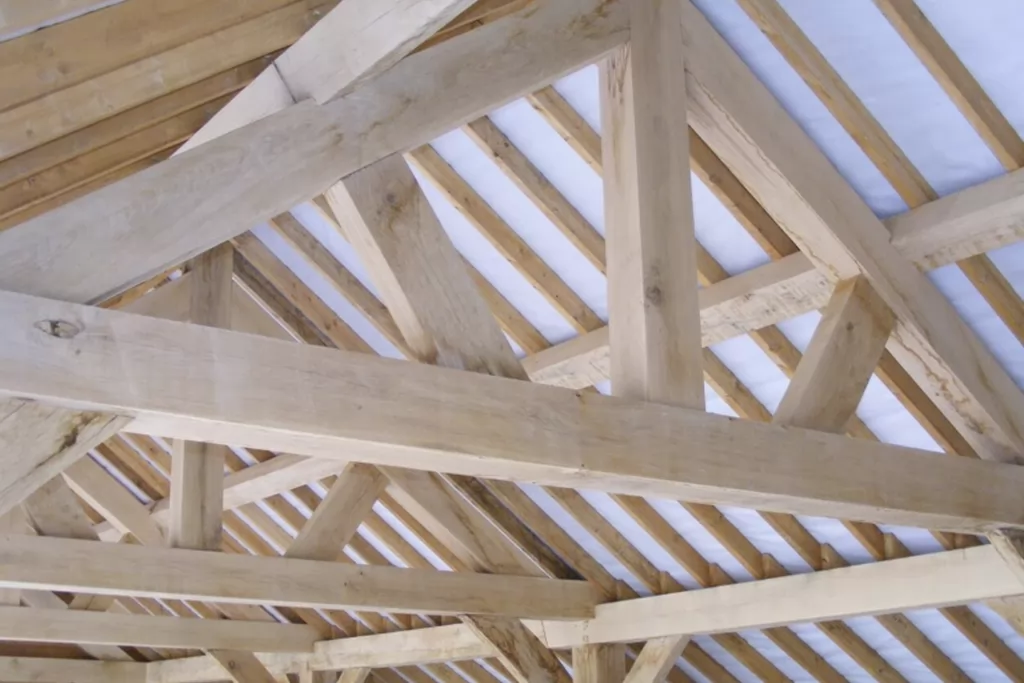
Fresh oak is golden and warm — but over the years, it transforms into the silvery-grey that defines the English countryside.
One of the great joys of an oak framed building is watching it age. Fresh green oak is a warm, golden honey colour — but within a few years of exposure to sun and rain, it begins its transformation into the silvery-grey patina that defines the English landscape.
Why does oak change colour?
The colour change is caused by ultraviolet light and moisture. UV rays break down the lignin (the natural glue that binds wood fibres) at the surface, while rain washes away the degraded material. Over time, the exposed surface lightens to a soft silver-grey.
The process is entirely natural and does not affect the structural integrity of the timber. In fact, the weathered surface acts as a protective layer for the oak beneath.
The timeline of weathering
Months 1–6
Fresh green oak begins as a warm golden-brown. Within the first few months of exposure, you'll notice the surface starting to lighten, particularly on south- and west-facing elevations that get the most sun.
Year 1
The most dramatic change happens in the first year. The golden tones begin to mute, and a softer, lighter brown emerges. Surface checks (cracks) may appear — this is normal and part of the seasoning process.
Years 2–3
The silver-grey patina begins to develop in earnest. South-facing beams will weather faster than those on the north side, so you may notice uneven colouration initially. This will even out over time.
Years 5+
By five years, most exposed oak will have achieved a uniform, beautiful silver-grey. The frame now looks as though it has always been there — settled, mature and timeless.
To treat or not to treat?
This is one of the most common questions we receive, and the answer is: it depends on your preference.
Letting it weather naturally
Most of our clients choose to let their oak weather naturally. The silver-grey patina is what gives oak framed buildings their timeless, characterful appearance. No maintenance is required — the weathering process is self-limiting and protective.
Preserving the golden colour
If you prefer to maintain the original warm colour, you can apply a UV-resistant oil or finish (such as Osmo UV Protection Oil or similar products). These must be reapplied every 1–3 years, depending on exposure. This requires ongoing commitment — if you stop reapplying, the oak will begin to weather.
Traditional treatments
Historically, oak was sometimes treated with linseed oil or beeswax. These provide a deep, rich finish but require regular maintenance and can attract dirt. They're more suited to interior oak than exterior frames.
Our recommendation: For most garages, gazebos and garden rooms, we recommend letting the oak weather naturally. It's maintenance-free and looks better with every passing year.
Interior oak
Inside your building — where the oak isn't exposed to UV and rain — the colour change is far slower. Interior oak will retain its warm golden tone for many years, developing a deeper, richer patina through handling and air exposure. Interior oak can be oiled or waxed to enhance and protect its colour.
Every oak frame we build is designed to age beautifully. Talk to us about your project.
From the guide to the build