Materials
Green oak vs air-dried oak: which is right for you?
Both are beautiful, but they behave differently. Understanding the distinction helps you choose the right material for your project.
If you're planning an oak framed building, one of the most important decisions is whether to use green oak or air-dried oak. Both are beautiful, durable and long-lasting — but they behave quite differently, and each suits different applications.
What is green oak?
Green oak is freshly cut timber — typically felled and used within a matter of months, while the wood still has a high moisture content (often 50% or higher). It's the traditional material of choice for oak framing, and has been used in English timber-framed buildings for centuries.
Advantages of green oak
- Easier to work — The high moisture content makes green oak softer and easier to cut, drill and joint by hand. Mortise and tenon joints, drawbore pegging and decorative carving are all far simpler in green oak.
- More affordable — Because it hasn't gone through a lengthy drying process, green oak is generally less expensive than air-dried oak.
- Traditional — If you want an authentic, centuries-old building method, green oak is the material your ancestors would have used.
- Takes stain and treatment well — Fresh oak is more receptive to surface finishes.
Characteristics to be aware of
- Movement — As green oak dries over the first few years, it shrinks, twists and develops surface cracks (called checking). This is entirely normal and is part of the character of a green oak frame. The joints tighten as the wood shrinks, actually making the frame stronger.
- Tannin leaching — Fresh oak releases tannins, which can stain nearby stone or brickwork in the early months. We advise on protection during installation.
What is air-dried oak?
Air-dried oak (sometimes called seasoned oak) has been cut and then left to dry naturally — typically for one to two years per inch of thickness. By the time it's used, the moisture content has dropped significantly, making it more stable.
Advantages of air-dried oak
- Stability — Air-dried oak has already gone through most of its movement, so it's far less likely to shrink, twist or check after installation.
- Precise fit — For applications where tight tolerances matter — doors, windows, interior joinery — air-dried oak holds its shape.
- Richer colour — The drying process deepens the colour, giving air-dried oak a warmer, more golden tone.
Characteristics to be aware of
- Harder to work — Dried oak is significantly harder than green oak, making hand-cut joints more difficult and time-consuming (and therefore more expensive).
- Higher cost — The lengthy drying process and the additional handling involved make air-dried oak more expensive.
- Limited sizes — Very large sections of air-dried oak are rare and costly.
Which should you choose?
For oak framed garages, gazebos and garden rooms
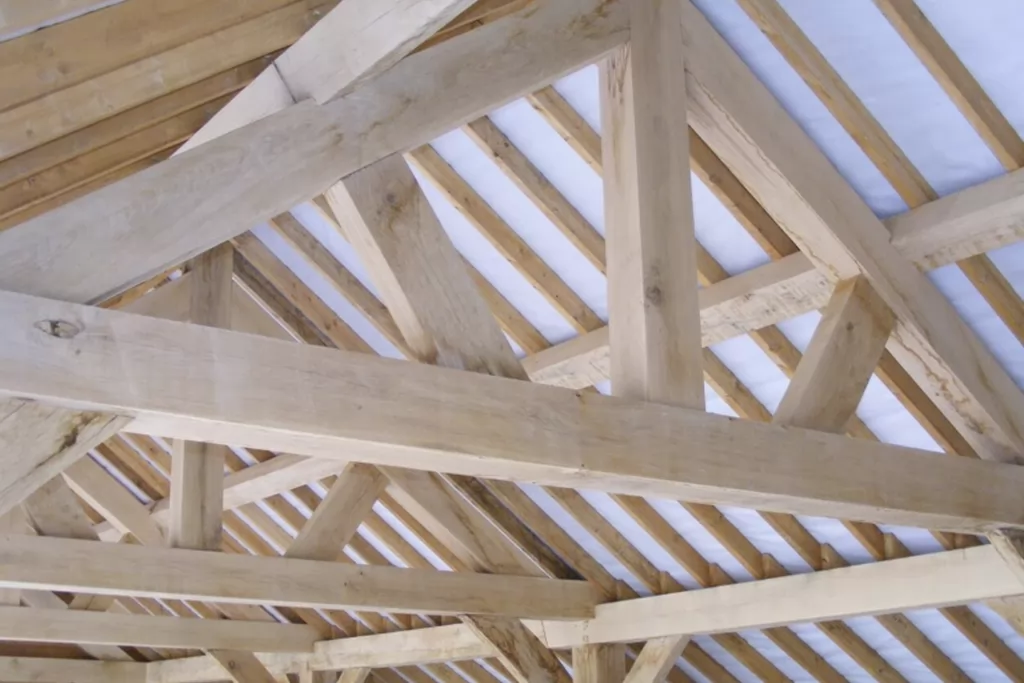
Green oak is the right choice for the structural frame. It's traditional, affordable, easy to joint, and the movement and checking add character rather than causing problems. As the frame dries, the joints tighten — making the structure stronger over time.
For doors, windows and interior joinery
Air-dried oak is preferable for elements that need to remain stable — glazed doors, window frames, fitted furniture and interior detailing. Using green oak here could lead to warped doors or cracked panels as the timber seasons.
For outdoor furniture and decking
Air-dried oak or quarter-sawn oak is recommended, as stability is more important than the characterful movement you'd welcome in a frame.
Our approach
At Southern Oak, we typically build our frames in green oak for its workability, tradition and value, and use air-dried oak for doors, windows and fine joinery where stability matters. We'll advise on the best material for every element of your project during the design stage.
Want to discuss your project? Get in touch for expert advice on the right oak for your building.
From the guide to the build